FoodCheck

FoodCheck

Scrappy 0-to-1 Prototyping & The Data Moat Problem (2024)

Rapid PrototypingReact NativeSupabaseSolo Founder
Client: Consumer Tech (Co-Founder & Builder)Year: 2024
01

The Hypothesis: Democratizing Nutrition Data

Solving information asymmetry in the grocery aisle

Consumers are drowning in deceptive food labeling and complex chemical names, yet most nutrition apps just count calories. FoodCheck started as a hypothesis: if we give shoppers a frictionless barcode scanner that instantly translates ingredients into simple 'Trust Scores,' we can change purchasing behavior at the point of sale. As Co-Founder, I owned the product strategy, UX (Figma), and frontend build (React Native/Xcode) to get this into the hands of real users.

  • Role: Co-Founder, Product & Frontend Lead
  • Stack: React Native, Supabase, Figma, Apple Xcode (TestFlight)
  • Target Market: Health-conscious Gen-Z and Millennials (US/India)
  • Objective: Rapidly prototype and validate the scan-to-trust consumer behavior.
02

Doing Things That Don't Scale

Manually bootstrapping the marketplace

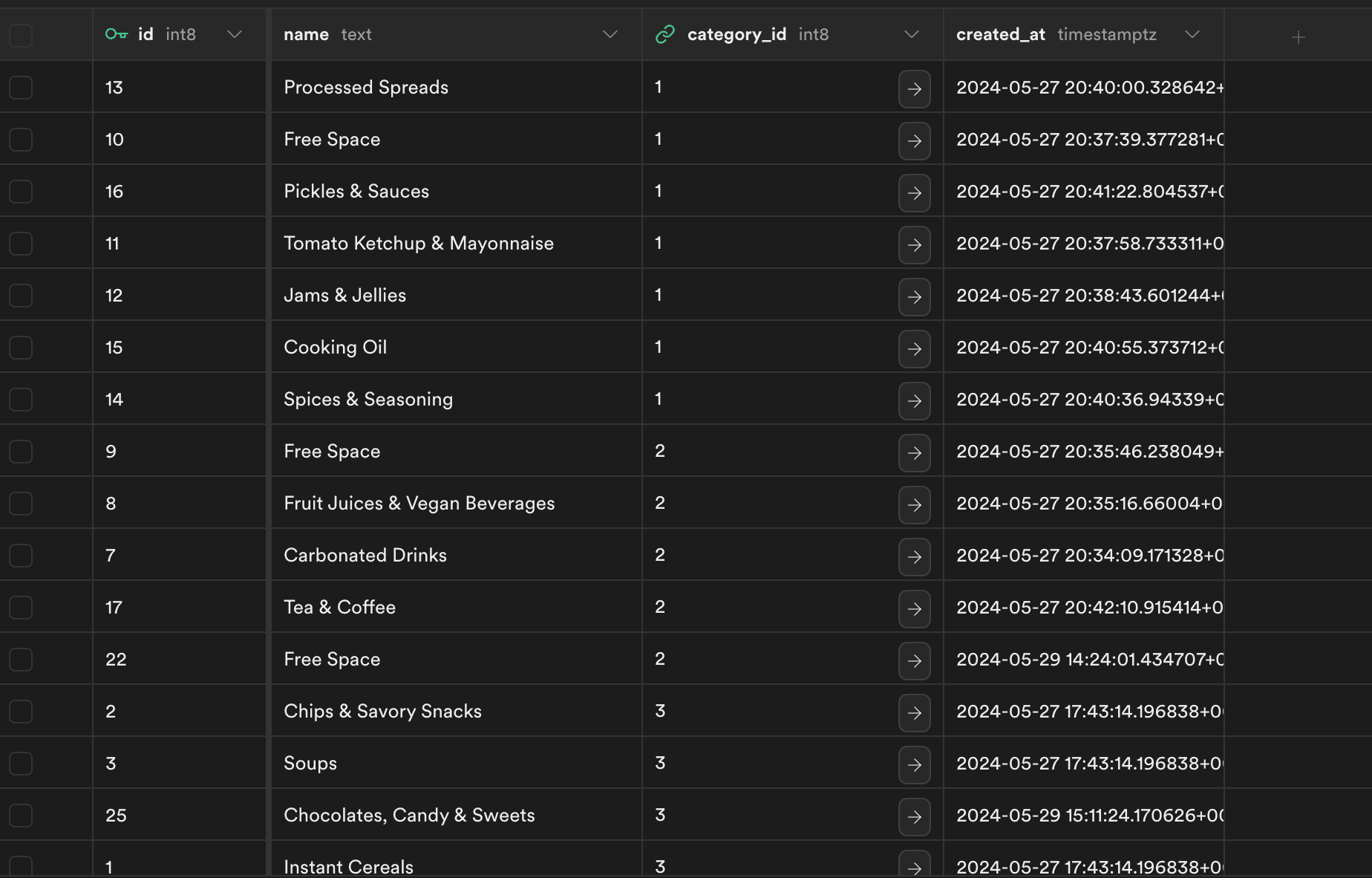
A scanner app dies the moment it returns 'Product Not Found.' To ensure a seamless day-one experience without waiting for network effects, I manually built the initial data catalog. I wrote scripts to scrape USDA databases in the US and private e-commerce aggregators like Blinkit in India. I mapped 1,000+ top-tier SKUs to detailed allergen and additive profiles, doing the dirty operational work required to fake a complete ecosystem.

  • The Grind: Scraped, cleaned, and structured 1,000+ product profiles across two distinct global markets.
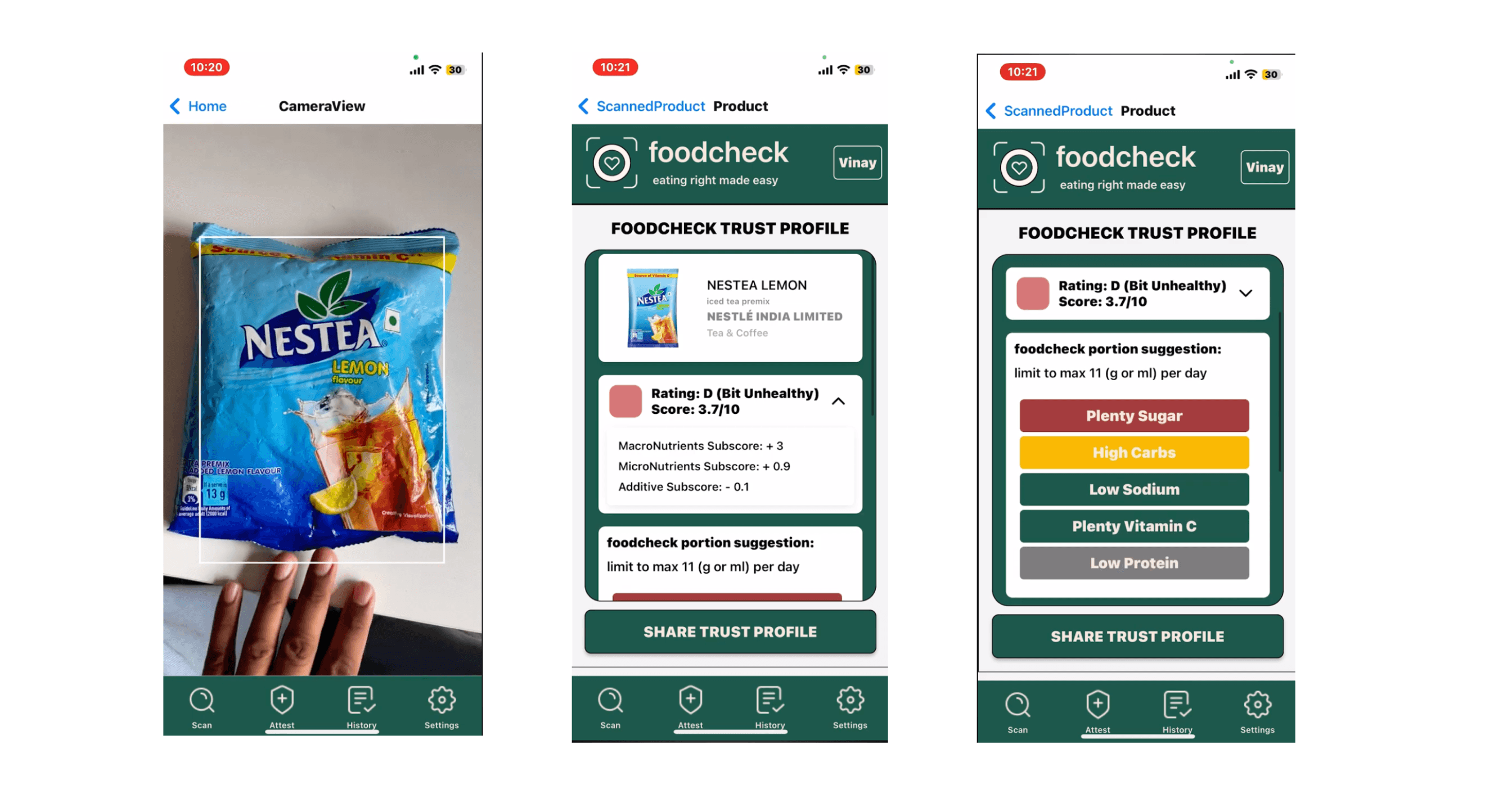
  • Information Architecture: Translated dense regulatory ingredient lists into a consumer-friendly 'Nutrition Trust Profile'.
  • The Goal: Guarantee >90% scan success rate on day one to minimize activation friction.
Project image 1
03

From Utility to Habit

Designing the 'Scan-to-Save' loop

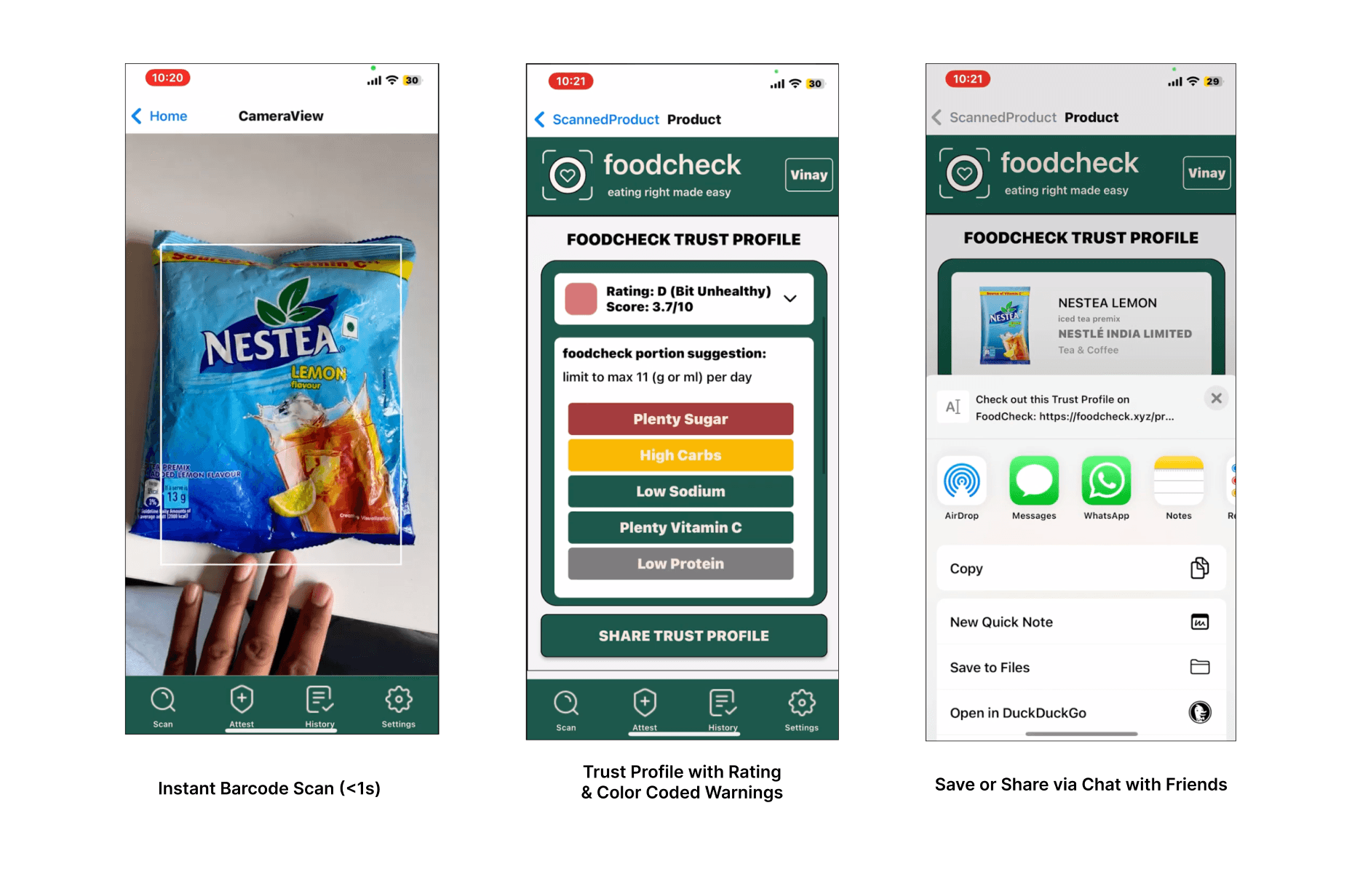
A barcode scanner is inherently a one-and-done utility. To escape the 'delete after one use' trap, I designed a feedback loop that rewarded users for investing their data into the app. Instead of just displaying data, the UI prompted users to share their scans to build a longitudinal 'Shareable Trust Profile' over time.

  • Trigger: Uncertainty in the grocery aisle.
  • Action: Low-friction barcode scan (<2 seconds).
  • Reward: Instant, color-coded additive warnings (e.g., 'High Sugar', 'Palm Oil').
  • Investment: User saves the item and shares with friends, personalizing their historical health profile and increasing switching costs.
04

Shipping the MVP

Engineering trade-offs for speed

Speed to validation was more critical than building a perfectly architected backend. I leveraged Supabase for rapid cloud deployment and React Native to ship to iOS via TestFlight. To keep the app lightweight and avoid heavy local storage, I made the explicit trade-off to require an active internet connection for all database queries, sacrificing offline mode for speed-to-market.

  • Execution: Deployed functional MVP to TestFlight in under 4 weeks.
  • UX Abstraction: Replaced complex chemical jargon with intuitive, color-coded warning states.
  • Trade-off: Sacrificed offline capabilities to maintain a light app footprint and real-time catalog updates.
Project image 1
05

The Wall: When Unit Economics Break

Knowing when to kill the project

The prototype successfully validated the UX, but it also exposed a fatal operational flaw. Scraping data was fine for a demo, but delivering on the promise of 'Trust'—especially for non-packaged or fresh foods—required first-hand lab testing. The true moat wasn't the app; it was a capital-intensive B2B data supply chain. As a solo founder, I recognized the operational ceiling and made the hard call to shut it down post-validation rather than burn time on an unscalable model.

  • The Bottleneck: Delivering accurate additive/allergen data required partnerships with independent testing labs.
  • Resource Reality: Building this verified data pipeline required significant capital and a dedicated ops team.
  • The Pivot: Made the capital-efficient decision to call off the project, saving time and resources for scalable ventures.